Sunday, October 28, 2012

Theatre in the Dark - Evening One: Dark


Directed by Jeremy Aluma, Denise Blasor, David Bridel, Susan Heldford, Ron Sossi
Presented by The Odyssey Theatre Ensemble

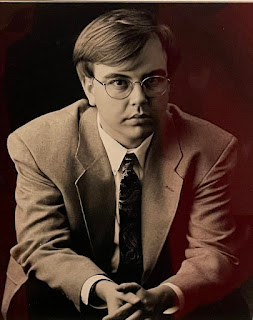
Review by Phillip Kelly

An idea has to begin somewhere even if it can't break from its gimmick and become something that presents an emotional truth that you can hold onto, feel and walk away from the theatre with. The Odyssey Theatre Ensemble has a series of short pieces presented under an interesting light and that is with no lights on. You sit in the dark. You listen. You taste. Your other senses are allowed to flourish. Intriguing. It reminds me of the local Los Angeles restaurant: Opaque.

My biggest problems with the production were the pieces presented and the way in which they were presented

The pieces were generally fluffy and the thought provoking ones consisted of psych 101 subject matter, "If a tree falls in the forest and no one is there..." The frustrating thing was several of the pieces didn't even fit the premise of the evening (I reference again "Sound in the Forest", which I'm certain was not taking place at night.) If we're going to sit in the dark, presenting pieces that take place in the dark would be the simplest thing to present to the audience. My mind was brimming with alternative pieces to the ones presented that didn't need to be presented in the dark. And many of the pieces simply lasted well beyond the point in which I got it.

In all of this, there was nothing of emotional levity to hold on to. The presentation avoided anything even slightly grounded and real. No searching of real human emotions, for instance the reality of miners trapped in a cave. Instead the actors were directed to perform with slightly comical voices or to simply talk directly to the audience. Drama or intensity meant the volume being turned up to 10. I know when a man on the street yells at me, it doesn't make me feel intensely - I simply stare at him strangely and move on. I don't think there was a single person the entire night that spoke softly or whispered, which when presnted in the dark, is an eerie thing. Instead many of the pieces blended together because there simply was no change in tone or volume or emotion. Maybe this has something to do with the vast number of directors and lack of a unifying vision for the evening.

I'm not a complete hater. There were moments that were ghostly and even (David) Lynchian and those moments occurred when the lights came up just enough to make out a person or some kind of movement on stage. So if you do end up seeing this show, don't close your eyes, you'll miss seeing the best parts in a show that is presented mainly in the dark. Also, while overused, the sound effects were nicely put together. All of this could have invoked the excitement of the radio listening era with a new and interesting edge and twist.

Part two of this festival comes around in two weeks, More Dark (and the two shows will be running in rep). Part of me is still curious to see this done well, but dubious to try again so soon before they can work the kinks out and let the concept grow and breath for a second round.


Theatre in the Dark, Evening One: Dark presented by The Odyssey Theatre Ensemble
2055 South Sepulveda Blvd, LA, CA 90025
October 20 - December 16th
 Go to website for times: www.odysseytheatre.com
Box Office 310-477-2055
info@theodyssey.com

Tuesday, October 02, 2012

Big and Small

The lovely Red Snapper gives a rundown of bar costumes vs. event costumes on her blog today:
Bar costumes aren't necessarily intended to be seen from the back row of a large theater.  Bar costumes are a smart investment for a newer performer, for someone with a weekly show, or for someone who wants to hit the ground running and to perform as frequently as possible.

[...]

Event costumes are those you intend to sparkle and shine on a big stage.  They need a bit more "wow" than a bar costume because they need to be seen from the back of the house.
Go read the whole thing.  It's fully illustrated with photos from past performances, so beware a little butt crack and cleavage, if you're reading it at work, but otherwise it's 98% SFW.

This reminds me of "rightsizing," a word that has become a euphemism for "downsizing," but which -- when I first heard the term -- had more to do with observation, estimation, and execution with a minimum of wasted effort and materials.  The way I look at it, "rightsizing" is first cousin to "just in time" production, at least in the milieu of intimate theatre.  Knowing your venue and your audience can help advise the choices you make as a producer.

Do you see any correlations between Red's article and theatre production?

Monday, September 10, 2012

Xanadu

directed by Hallie Baran
musical director Chris Raymond
choreographer Angela Todaro
producer by Doma Theatre Commpany


review by Phillip Kelly

Xanadu is camp, but it's also supposed to be funny and so it should have the energy of an all out comedy, big, over-the-top splendor. It doesn't have to connect with us emotionally, the plot is too ridiculous for that and the characters too thin, we should, however, believe that the leads have fallen in love. This is a show that should cling to a wide-eyed optimism and youthful energy; kids in the backyard being ridiculous and irrelevant - like most 80's romantic comedies were.

Doma's production, directed by Hallie Baran, lacks that inspired vision and energy to elevate the show. Some of the song and dance numbers are fun (there's an enjoyable tap dance), but the scenes in between lack the energy and pace of comedy, and they end up feeling like a bad 80's movie, instead of something that celebrates bad 80's movies. To be fair those elevated and amusing moments are occasionally found, but had they permeated the entire show this would have been a better review.

Comedy is also in the details. A missed reaction, or mistimed glance will throw off a joke entirely. It didn't feel like a lot of time was spent in refining these beats throughout the show.

The performers aren't bad and they help sell some of those moments. Lovlee Carroll, hits some perfect notes and garners some genuine laughter from me. Lovelee plays the muse Kira, who comes to life from a mural that Sonny Malone, as played to be a Venice Beach, Keanu Reeves artist by Matt O'Neill, has painted. She's there to inspire him to greatness. They end up having to talk a business mogul Danny Maguire (David Michael Travino) into letting them use an abandoned theatre that he owns (and even built) for their vision. Meanwhile, two of Kira's muse sisters from Mount Olympus decide to get her banished forever by getting Kira and Sonny to fall in love. But is there love real or is it a curse? So, as you can see, the story is pretty ridiculous.

Brittany Rodine as evil sister Calliope finds the right tone with her performance and when she's given the opportunity she bathes in the camp. Alan Lee and Bradley Sattler look like they're having fun and are pretty good dancers, and David Michael Trevino, once he starts singing and dancing comes to life. Matt O'Neill is charming as Sonny. There is some talent here. There's just a lot of missed opportunities to bring the show to life with them. It feels like they're playing at camp as opposed to embracing it.

Bring some dollar bills, as they have a full bar and cotton candy in the lobby!

Xanadu presented by Doma Theatre Company at the MET Theatre
1089 N oxford Ave. LA, CA 90029
Sept 7th-Oct 7th.
Tickets: 323-802-4990 or www.DomaTheatre.com


The Blue Iris


written by Athol Fugard
The Fountain Theatre presents 
The United States Premiere
review by Phillip Kelly


There's enough at work here in Athol Fugard's The Blue Iris to play with, but the director Stephen Sachs doesn't know how to take advantage of it.

Yelling at the top of a show, especially if it's a ten minute long argument is one of my pet peeves as a viewer and a theatre artist. Anger is a secondary emotion and yelling isn't an emotion at all. It hides who the characters are and how they feel about what they want; yelling does not create vulnerability. If both characters are yelling, then how are we to decipher who they are to each other. I'm right and you're wrong, no I'm right, no I am. Yelling is not storytelling. An actor, especially a good one, has so many more instruments than volume that can be used to create an interesting dynamic, even with anger, that can start a show. Beginning the show like this allows little room for those actors to build to anything. There are so many more interesting ways to show anger, hatred, dislike. More specifically... well, let me back up...

The Blue Iris takes place in the South African desert Karoo (I got that bit of info from the press release, as I don't remember it being said in the play). The exact location of the show is in a burnt down farmhouse. The resident farmer Robert Hannay (Morlan Higgins) and his housekeeper Rieta (Julanne Chidi Hill) sort through the carcass of this once living place, toiling with the debris and their memories. It's a metaphor, a particularly heavy handed one if not handled with grace. The opening argument is "Shall we stay or shall we go". Rieta thinks they should leave, Robert does not, because he's trapped with his memories, the memories of his wife, Sally (Jacqueline Schultz). She died in the fire. More specifically, this is an argument Robert and Rieta have had many times, to the point of exhaustion. They are exhausted, emotionally, physically, so why are they yelling the same argument to each other that they have so many times before while in this state? It's such an easy path for the director to take and gives me nothing of interest to watch. Or if they are going to yell make it brutal and unforgiving, a la Virgina Wolf. But none of these choices are made.

There are long, extremely long passages of Robert and Rieta talking about the past and about Sally. This is another pet peeve of mine. Show me what's happening now. And eventually Fugard finds an interesting way to meld the past with the present and for a time the show comes to life. Robert finds an undamaged painting of a Blue Iris that Sally drew and this brings the ghost of Sally, at least for Robert, to life. With her on stage we see many of the stories we were already told play out, only the point of view has changed and we come to understand a more balanced truth of the series of events and what kind of man Robert truly was.

This segment of the show was haunting in a way that made me recall the Japanese film Ugetsu. Though, again, even this segment of the show relied too heavily on yelling and volume to dictate the intensity we should have been feeling as an audience. Or maybe it just didn't play because that emotional level had been spent early on in the show.

There were some great decisions made, especially technically and with stage design. The set is haunting. The costumes are dirty and grimy. The make up is excellent. All of this creates a palpable physical world and haunting ghostly world. The director and lighting designer make a bold, effective and eerie choice with two lighting cues to bring about the change in tone, preparing for Sally's arrival, or maybe they didn't. I was taught that if you do something 3 times, people will think it's brilliant. If you do it twice, people will think it's a mistake. And as effective as these wonderful lighting transitions were, part of me still wonders if they were a mistake, especially when there was a third opportunity in the show in which this lighting change would have tied it together - when Sally appears. It was a disappointing, missed moment. That's how I felt about much of the play, like a deeper truth was missed in the staging.

The actors are well cast, but are asked to react in ways that feel unnatural and dishonest. This is a melodrama, to be certain, and while there are effective moments and some interesting revelations, I never found myself connecting with the characters or caring about their plight.


The Blue Iris written by Athol Fugard. Directed by Stephen Sachs.
The United States Premiere at
The Fountain Theatre, 5060 Fountain Ave, Los Angeles, CA 90029 (Fountain and Normandie)
August 24th-September 16th
Tickets: 323-663-1525  www.FountainTheatre.com

Thursday, August 30, 2012

The Value of Exclusivity

A Guest Post by Lili VonSchtupp

A couple of months ago there was a conversation in the burlesque community about producers who were demanding exclusivity of their performers. Lili VonSchtupp, the Foul-Mouthed Buxom Godmother of Los Angeles Burlesque wrote the following article, and I am reprinting it here with her permission.
 
As performers we sometimes forget that without producers there are no shows. Lili is a successful producer of the longest running weekly burlesque show in town. When she speaks, it pays to listen:
  
Dear performers,
 
The value of exclusivity runs both ways.
 
As producers, we have every right to ask for exclusivity. It benefits a producer/show to have you only appear with them. This doesn't make us greedy, or mean we’re trying to keep you from working and making money, this makes us a good business people who want to run a consistent show and keep it going for years. We have seats to sell in order to pay you. The more seats we sell, the more money we have to pay performers and the more we get rewarded for the hard work we do to keep a show going in this economy.
      
Please understand why exclusivity matters. If someone can see you at 3 or 4 other shows a week, sometimes for less than what I charge for a cover, you have little added value to me as a performer. Why would someone pay $15 to see you at my show when they can see you for free elsewhere doing the exact same thing? Your value as a performer for a show is directly related to your overexposure. More does not equal better. When 10 shows in town all have the same cast, what makes any of them different or special? We have to sell people a reason to see this show.
     
Very few performers are a huge draw because they are oversaturated. I put all the performers’ names on flyers as a courtesy, rarely as a selling point. How many performers really have enough fans that come to EVERY show to see them, who can help support all the shows the performer is in? But if I have a show of performers not seen elsewhere, that is a huge selling point.
      
With a huge oversaturation of performers and shows during a recession, what did we think would happen? The bottom fell out. Everyone wants more stage time, everyone wants to be paid more, but there is less audience willing and able to pay. This is all about the math. Think about it: 100 seats times $5, is $500. 10 girls in a show at $50 each, is $500. Um, the producer makes no money for putting on the show. Plus they lose money for printing, production time, marketing, and everything else we do. Sometimes crap money is all a show can pay, exclusivity or not. And if you don't like the terms, don't take the gig.
      
A misconception in the arts is that value and pay are directly related, but they are not.
       
Things that make you worth more and thus sometimes paid more:
  1. Scarcity
  2. Level of expertise
  3. Cost of production (Large props and expendable props)
  4. Ticket price and venue capacity
I have well over 250 weekly shows at Monday Night Tease! under my belt, and I require certain exclusivity to some acts, requesting you not perform the same act 2 weeks before or after at another show in LA. I'm responsible for paying you so I do get to set guidelines. If you don't like them, please work elsewhere. I don't take it personally. And neither should you. That is how a free market works.
 
As a performer, exclusivity benefits you as you grow and build a following over time. You get better and your fans become more rabid. But remember most performers don't ever reach that place. (Sorry to be a rain cloud.) You have to balance the need to be on stage with the desire to sell yourself as a headliner for higher paying events, if they are even available in your town. You have to work hard and do crap gigs for little money to build your skills and build your reputation. We all do. That is called work, and I think some people forget that part. Now, would you rather perform in eight shows a week or just one show a week, and make the close to or the same money? That's how an exclusive contract can help you as you get better.

“But Lili,” you say, “they want exclusivity and don't want to pay more.” Yes, sometimes they do. And the best thing about a free market is...? You can say no. That producer/show will survive or fail because people want to work there or they don't. If enough people don't, it will fail and a new show will pop up in its place. Businesses fail every day. Businesses start every day. Or you can go exclusive at a lower rate, build better shows with your producer and all benefit later as ticket prices can be raised and pay can be increased. YOU need to decide what is right for you.
 
Burlesque is a part time job for almost everyone I know. You make minimum wage at best, considering call times and total length of the show, or if you do the crazy math, you make $50 for 4 minute act. But it isn't a 40 hour a week paying gig for most people. For every Dita and Dirty Martini, there are (conservatively) 10,000 performers wanting that job!
 
You all know Dita right? Well, she started in a strip club and did lap dances. Fifteen or more years later she's making good money headlining her own show and doing private events. But it seems most of her money comes from her burlesque adjacent work: modeling, endorsements, a clothing line. She doesn't perform in 10 shows a week anymore. She built a brand: DITA. You should be working toward building yours.
      
No one said we all get to be stars. Most of us will never make a living as a performer. Maybe you need to reset your expectations for the career you chose. Most of the artists I know are part time, no matter how good they are. There simply isn't a large burlesque circuit of $1000 a week gigs, either for working nightly or for a one-time exclusive fee.
 
Whenever I get upset about burlesque and the drama, my friend Mike reminds me, "No one got into burlesque to have a boss." And I laugh and remember that yes, it is a just a job; albeit the best job I've ever had, even when I have to be the big bad boss.
 
Thanks for reading,
 
Lili
           
Lili VonSchtupp is the producer of Monday Night Tease at Three Clubs in Hollywood, and the Head Mistress of Lili's School for Wayward Girls where she teaches intermediate and advanced classes for burlesque performers.

Funny Stuff


Photo of Groucho via Decaying Hollywood Mansions.

A couple of geniuses, whose opinions I greatly value, both recently posted about comedy, comedians, and comedy clubs.  The geniuses in question are Red Snapper and Scot Nery.

First up is Red:
I sat with an acquaintance of a friend at the show, not someone I knew at all. I chit-chatted before the show with this fellow from flyover country who had never been to a comedy club before. I thought he knew what to expect, but obviously he didn't. You see, he got up during the second-to-last comic's set and shouted at the comic, then threw his water bottle toward the stage before storming out of the club. He didn't like being picked on, especially when it came to jokes of a sexual nature, and he apparently had no idea how comics work.


Two things about comedy shows:
... but you'll actually have to visit her blog to read those two things in her post, entitled  "Am I Right, Ladies?"

Scot published "4 Ways Comedy Gets Poorer," in which he states:
Comedians need to stop complaining that they can’t make a living. I am a professional comedy performer and I’ve seen comedy be devalued over the past 12 years that I’ve been full-time. Because it’s been slow, I’ve been able to see it happening and have had time to get over a lot of my initial anger or fear. I see the depreciation of funny-business as just one example of the evolution of commercial art. Here’s a list of a few things that help to take the monetary value out of comedy. I’ll try to not spout too much nostalgia.

... and definitely go read his list.

Mr. Snapper and Mr. Buddy after our first performance at The Comedy Store.
My comedy partner and I have been testing the comedy club waters with our brand of neovaudevillian shtick, with varying results.  The other performers and staff seem to really enjoy us, but outside of the audience we bring to these bringer shows, the people in the dark seem to be at a bit of a loss when we take the stage. It has been an interesting experience so far, a learning experience.  We don't do jokes about Fifty Shades of Grey or our relationship problems or smoking pot.  Not to say what we do is better than anyone else, it's just very different.

People like different, it seems, enough that we get booked and asked back.  I am fascinated by the audience-performer relationship.  How in seven minutes can my partner and I break down what the audience is used to seeing, get them completely on board with what we're doing, and make them laugh?  How can we clean the slate at the top of the act so that they are able to jump in and join us for our set?

The solution seems to be twofold:  1. Don't think we know it all (i.e. be self-reflective and willing to change) 2. Observe what others are doing and learn from it.

Part of number 1 is to push ourselves to try harder, to connect with the audience, to avoid lazy choices.

Number 2 means booking more shows and going to more shows.  Identifying the "market leaders," if you will, and figuring out how they are doing it.  Not that you can just do whatever Louis C.K. does and expect success -- there's only one of him, and that would be ripping off the shark anyway.  I'm talking about stripping it down and studying the technique, the mechanics behind such things as audience control, joke building, etc.  It's much more boring than just repeating someone else's jokes. 

The older I get, the more I realize that boring is good.

Monday, August 27, 2012

Disclaimer (Reminder)

No one knows anything.

Well, okay.  Malcolm Gladwell knows a thing or two:


The passage to which I wish to attract your attention:
Third thing that Howard did, and perhaps the most important, is Howard confronted the notion of the Platonic dish. What do I mean by that? For the longest time in the food industry, there was a sense that there was one way, a perfect way, to make a dish. You go to Chez Panisse, they give you the red-tail sashimi with roasted pumpkin seeds in a something something reduction. They don't give you five options on the reduction, right? They don't say, do you want the extra-chunky reduction, or do you want the -- no! You just get the reduction. Why? Because the chef at Chez Panisse has a Platonic notion about red-tail sashimi. This is the way it ought to be. And she serves it that way time and time again, and if you quarrel with her, she will say, "You know what? You're wrong! This is the best way it ought to be in this restaurant."

[...]

And the reason we thought that -- in other words, people in the cooking world were looking for cooking universals. They were looking for one way to treat all of us. And it's good reason for them to be obsessed with the idea of universals, because all of science, through the 19th century and much of the 20th, was obsessed with universals. Psychologists, medical scientists, economists were all interested in finding out the rules that govern the way all of us behave. But that changed, right? What is the great revolution in science of the last 10, 15 years? It is the movement from the search for universals to the understanding of variability. Now in medical science, we don't want to know how necessarily -- just how cancer works, we want to know how your cancer is different from my cancer. I guess my cancer different from your cancer. Genetics has opened the door to the study of human variability. What Howard Moskowitz was doing was saying, this same revolution needs to happen in the world of tomato sauce. And for that, we owe him a great vote of thanks.
As Hugh MacLeod once put it:


A few days ago I made a heady pronouncement on this blog:
If you dip into the Dramatists back catalog, you may sell more tickets.  But are you really challenging anyone, yourself most of all? Or are you rather playing it safe and painting by numbers?
A bit impetuous, considering the director of IAMA's first up, Shiner, directed a stirring and fresh production of The Elephant Man with the Mechanicals Theatre Group, a production I loved.

I'm really not a purist; I literally have skin in the game*.  I know there are those who think the theatre I make isn't theatre at all.  (Just as I know there are those who bristle at spelling "theater" with an "-re" instead of an "-er.")  But as my friend Scot Nery says, "It's all entertainment."  I get a little cranky sometimes, and like to pontificate on HOW THINGS SHOULD BE.  In the end, the only thing that matters is whether or not the people in the dark had a good time.  If what I consider to be "paint by numbers" theatre gets the job done, so be it.  Some people like Nunsense and some people really dig pretentious, art-for-art's-sake performance art.  They're all right.  It's better, perhaps, to try to understand the variety of forms live entertainment takes than to measure everything by some Platonic rubric -- particularly for a reviewer of live entertainment.

In closing, an exchange from that great masterpiece of cinematic storytelling, Robin Hood: Prince of Thieves:

AZEEM
Salaam, little one.

GIRL
Did God paint you?

AZEEM
Did God paint me? For certain.

GIRL
Why?

AZEEM
Because... Allah loves wondrous variety.

Who am I to argue with The Great One?

*see also The Mr. Snapper & Mr. Buddy Rumpus Revue in: "Ten-Gallon Giggles."

Remembering Werner and Bob

One of the beautiful things about theater is the relationships you form.  In some cases, those relationships last a lifetime. I'm marrie...